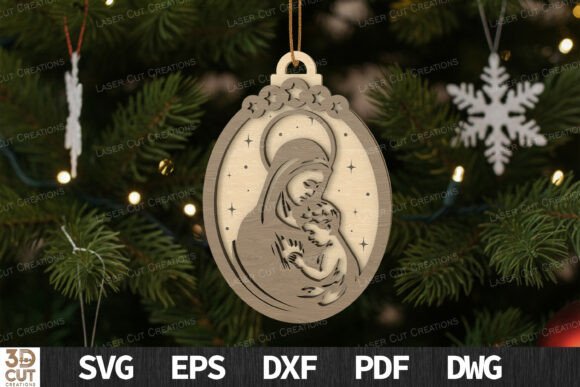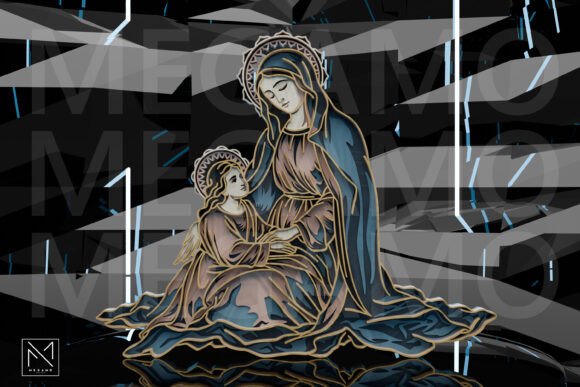
Mary and Child Laser Cutting Wall Decor SVG
When I first opened the Mary and Child Layered Laser Cut Svg, I immediately sensed the quiet reverence it carries. The layered composition gives soft depth, and the silhouette of the Virgin Mary holding Baby Jesus evokes a peaceful, devotional mood. This is not a loud, trendy design – it belongs in a niche that values faith, tradition, and handmade warmth. As a digital seller, I could see it appealing to Catholic shop owners, religious gift makers, and buyers looking for meaningful wall decor. The aesthetic leans toward elegant and decorative rather than modern or playful, which makes it ideal for projects where the intent is to honor a sacred moment.
Why This Design Works for Digital Sellers
From a business standpoint, the Mary and Child Layered Laser Cut Svg is a versatile graphic design asset that can be adapted across multiple product categories. I tested it in my own shop preparation workflow, and here is what stood out:
- SVG and PNG variations – The layered nature translates well to both vector cut files and printable PNG designs. I could use it as a standalone clipart for sublimation designs or as a multi-layer laser cutting project for physical wall decor.
- Niche appeal – Religious designs have a steady, loyal audience. This piece fits into Catholic-themed bundles, seasonal collections for Christmas or Mother’s Day, and digital download shops focused on faith-based content.
- Product potential – I could see it as a t-shirt design for a small church event, a mug design for a religious gift shop, or a tumbler wrap for a print-on-demand listing. It also works beautifully as a nursery print or greeting card for baptisms and christenings.
Testing Before You List
Before I commit to publishing any digital product on an Etsy product page or a creative marketplace, I always run a few practical tests. With the Mary and Child Layered Laser Cut Svg, I did the following:
- Mockup previews – I placed the design on a product mockup for a framed wall print and a layered wooden sign. The depth of the layers came through nicely, giving the listing a premium feel.
- Thumbnail appeal – I scaled it down to a 200-pixel square to simulate a marketplace thumbnail. Even at that size, the silhouette of Mary and Child remained recognizable, which is critical for click-through potential.
- Color and background tests – I checked the SVG on white, cream, and dark backgrounds. The layered effect works best on light or mid-tone surfaces; on very dark backgrounds, the contrast diminishes unless the top layers are in a lighter material. For sublimation designs on dark garments, I would need to add a white underbase or adjust the color palette.
- Cut quality for Cricut projects – I imported the SVG into Cricut Design Space. The lines are clean and well-separated, so it should cut without issues for Cricut projects or Silhouette Cameo. The layered pieces are distinct enough to assemble without confusion.
Where This Asset Excels
The Mary and Child Layered Laser Cut Svg shines in several specific selling scenarios. I would recommend it for:
- Large product previews – The design holds its detail when printed large, making it ideal for wall decor like 8x10 prints, canvas art, or layered wood signs. The intricate layering becomes a focal point that customers appreciate.
- Themed bundles – Pair it with other Catholic or Mary-themed designs to create a cohesive design bundle. This increases perceived value and encourages bundle purchases.
- Decorative layouts – Use it as a central element in a Canva template for church bulletins, prayer cards, or social media posts. The reverent tone fits well with serif and script fonts.
- Packaging design – For a handmade business that sells religious items, this design could appear on product tags, boxes, or packaging design to reinforce brand identity.
- Social media graphics – It works as a subtle background image for Instagram posts promoting faith-based products, especially when paired with a soft, minimalist layout.
Where to Use Caution
Not every application is ideal for this design. After testing, I found a few areas where sellers should be careful:
- Tiny sticker details – The layered elements include fine lines, especially around the halos. If you scale it down to a small sticker or a thumbnail, those details can blur or become lost. I would avoid using it as a standalone tiny sticker design unless the layers are simplified.
- Overly complex layouts – The design already has multiple layers. Adding too many text elements or other graphics can create visual clutter. For t-shirt design or mug design, keep the composition uncluttered.
- Low-resolution print products – The SVG is vector-based, but if you export a PNG at low resolution, the layered edges may show jagged artifacts. Always export at 300 DPI for printable design products.
- Crowded thumbnails – In a busy marketplace, the subtlety of this design might not pop as much as a bright, bold graphic. Consider using a high-contrast mockup or a soft background to make the silhouette stand out.
- Dark backgrounds – As mentioned, the layered effect relies on tonal differences. On a dark background, the bottom layers can disappear. If you are selling a sublimation design for dark items, include a white layer or adjust the design accordingly.
- Text-heavy templates – The design is best as a standalone visual. For a Canva template that includes a lot of text, the visual hierarchy may become confusing. Use it as a background element or a small accent instead.
Seller Notes and File Preparation
Before you upload this commercial design to your shop, take a few steps to ensure a professional outcome:
- Test on real mockups – Use a high-quality product mockup to see how the design looks on a wall, a mug, or a shirt. This also helps you write accurate descriptions.
- Preview as a marketplace thumbnail – Shrink the design to see if it remains clear at small sizes. If not, consider adding a simpler thumbnail version.
- Check white and dark backgrounds – The design should be legible on both. If it fails on dark, offer a variant with a white backing.
- Test print colors – If you are selling a PNG design for sublimation, print a sample on the intended material to verify color accuracy.
- Verify PNG transparency – Ensure the exported PNG has a clean transparent background, no white fringing around the edges.
- Inspect SVG cut quality – Open the SVG in a vector editor and check for stray nodes or overlapping lines. Clean up if necessary for laser cutting or Cricut projects.
- Confirm file resolution – For printable design products, the SVG should be scalable, but provide a PNG at 300 DPI for customers who prefer that format.
- Organize files clearly – Name the SVG and PNG files with descriptive titles like “Mary-Child-Layered-SVG” and include a folder structure. Customers appreciate clear organization.
- Pair with appropriate fonts – If you plan to add text to create a Canva template or invitation template, test with a serif font for a classic look, a script font for elegance, or a handwritten font for a personal touch. Avoid sans serif fonts that feel too modern for this sacred theme.
- Confirm commercial licensing – Before selling finished products, check the commercial license for the Mary and Child Layered Laser Cut Svg. Most marketplaces allow unlimited commercial use for physical products, but always verify terms for digital download resale or print-on-demand use.
Final Thoughts on Commercial Viability
The Mary and Child Layered Laser Cut Svg is a thoughtful graphic design asset that can strengthen a seller’s portfolio in the religious and faith-based niche. It is not a one-size-fits-all design, but for the right audience, it offers a genuine sense of devotion and quality. The layered structure lends itself well to wall decor and laser cutting projects, while the PNG version can be used in sublimation designs, printable designs, and social media graphics. As an experienced digital product creator, I would include it in a seasonal Catholic bundle or as a standalone product with detailed mockups. The key is to test thoroughly, present it in a way that highlights its intricate layers, and pair it with complementary design elements. With careful preparation, this design can become a steady source of sales for a shop that serves customers seeking meaningful, faith-centered merchandise.